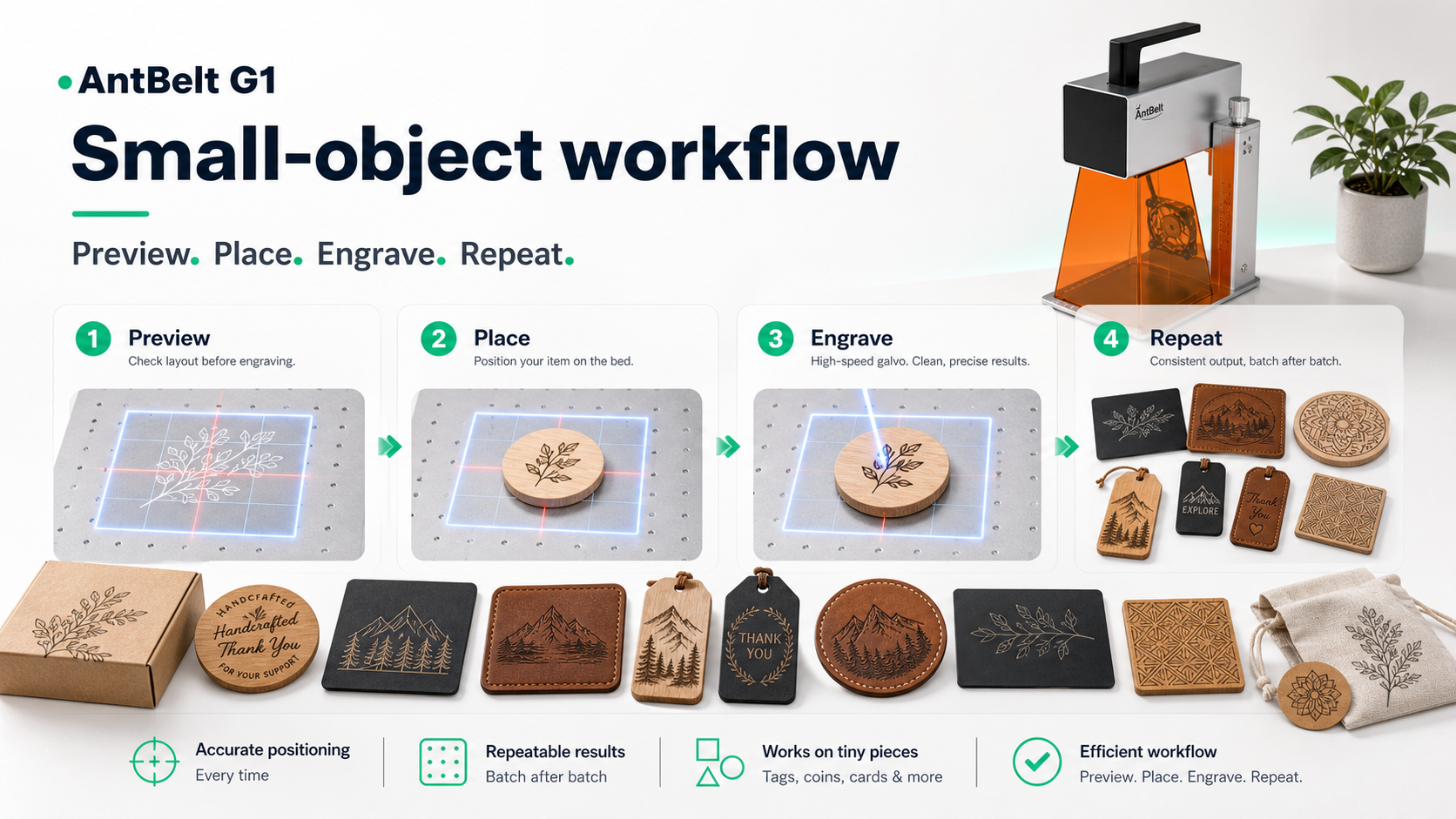
Before a maker runs a real product sample, it helps to separate layout checking from finished-sample pressure. A three-pass layout check can make that process calmer and easier to judge.
The first pass is only for placement. Use a low-risk blank, confirm the artwork position, and look for obvious alignment problems. The second pass checks scale. Ask whether the artwork feels readable on the actual object, not just on screen. The third pass checks product intent: would this sample help someone approve a gift, label, tag, or shop item?
For AntBelt G1, this kind of workflow fits the current pre-launch story better than exaggerated claims. The public materials show a compact desktop direction, prototype evidence, and sample-oriented updates. Final product details should stay tied to Kickstarter, but the workflow habit is already useful for makers planning small-object personalization.
A three-pass routine is especially helpful when testing:
- Small gift tags.
- Black cards or dark display pieces.
- Kraft packaging labels.
- Wood blanks and simple keepsakes.
- Seller samples that need customer approval.
The point is not to slow down the creative process. It is to keep each decision visible. If the placement is wrong, fix placement before discussing material. If scale is wrong, fix scale before judging the whole machine category.
For more repeatable desk-side thinking, see /updates/building-a-repeatable-maker-desk.html and the broader /updates/ archive.