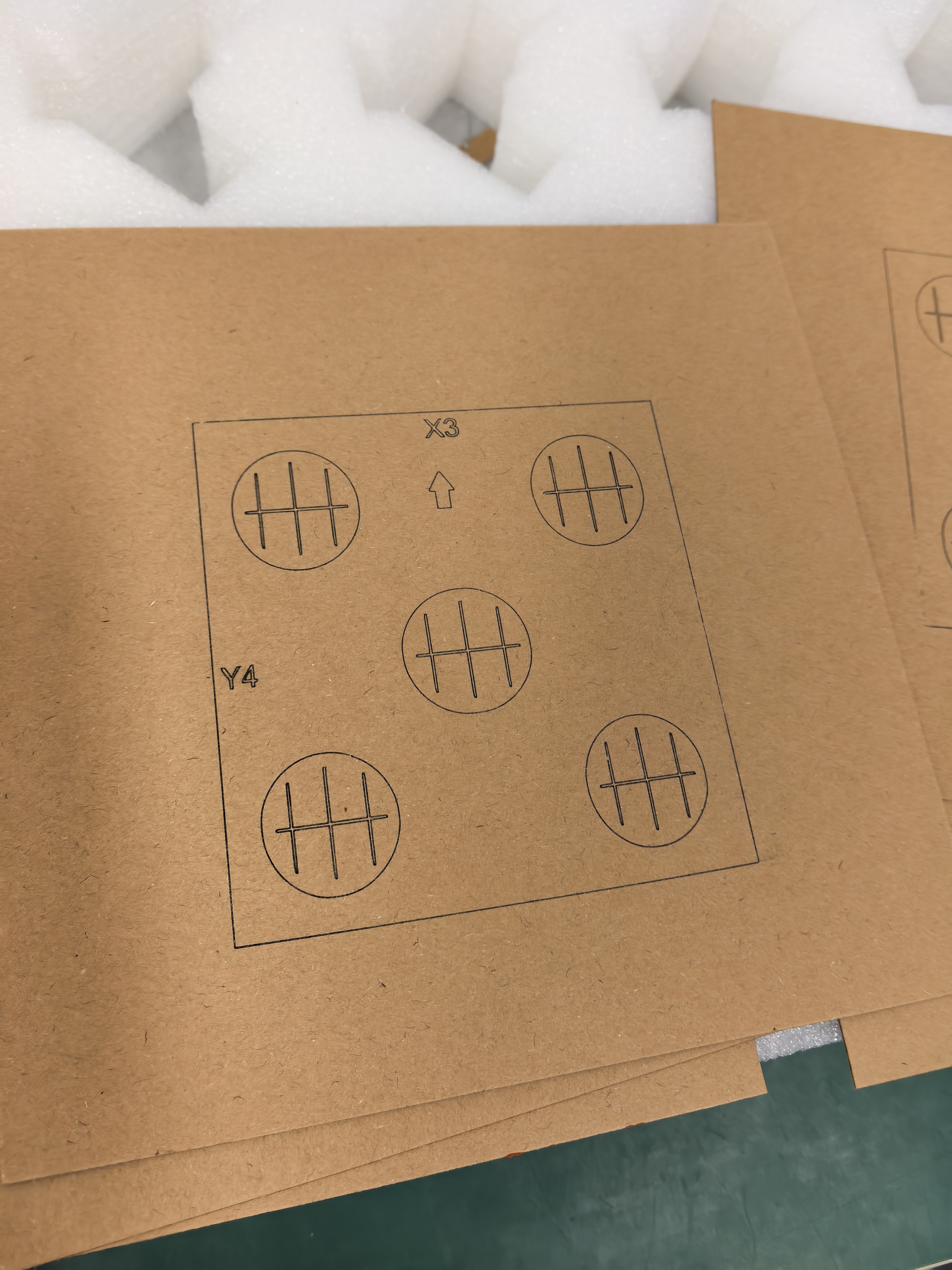
A small origin check can make placement decisions easier to review before a maker moves to a valued piece. The aim is not to predict a finished engraving; it is to confirm that the artwork, reference point, and object orientation agree.
Give each mark one job
On an appropriate practice piece, plan three simple marks: one near the intended origin, one along the horizontal direction, and one along the vertical direction. Keep them visually different. A dot, short line, and corner can be easier to discuss than three identical symbols.
Photograph the setup and result
Capture the object orientation and the completed check in separate photos. Name both files with the same job code. If something looks displaced, the pair helps distinguish an artwork assumption from a setup assumption. It also gives another operator a clearer starting point.
Reset before the real sample
Treat the check as a temporary planning aid. Confirm the current operating guidance, material suitability, focus, enclosure, and other required controls before any later run. Settings and outcomes can vary with material, finish, artwork, and setup, so the check is not a production guarantee.
Browse /updates/ for more AntBelt G1 workflow notes. Current product and campaign information should always be confirmed on the official project page.
Review current AntBelt G1 project details and updates on Kickstarter: