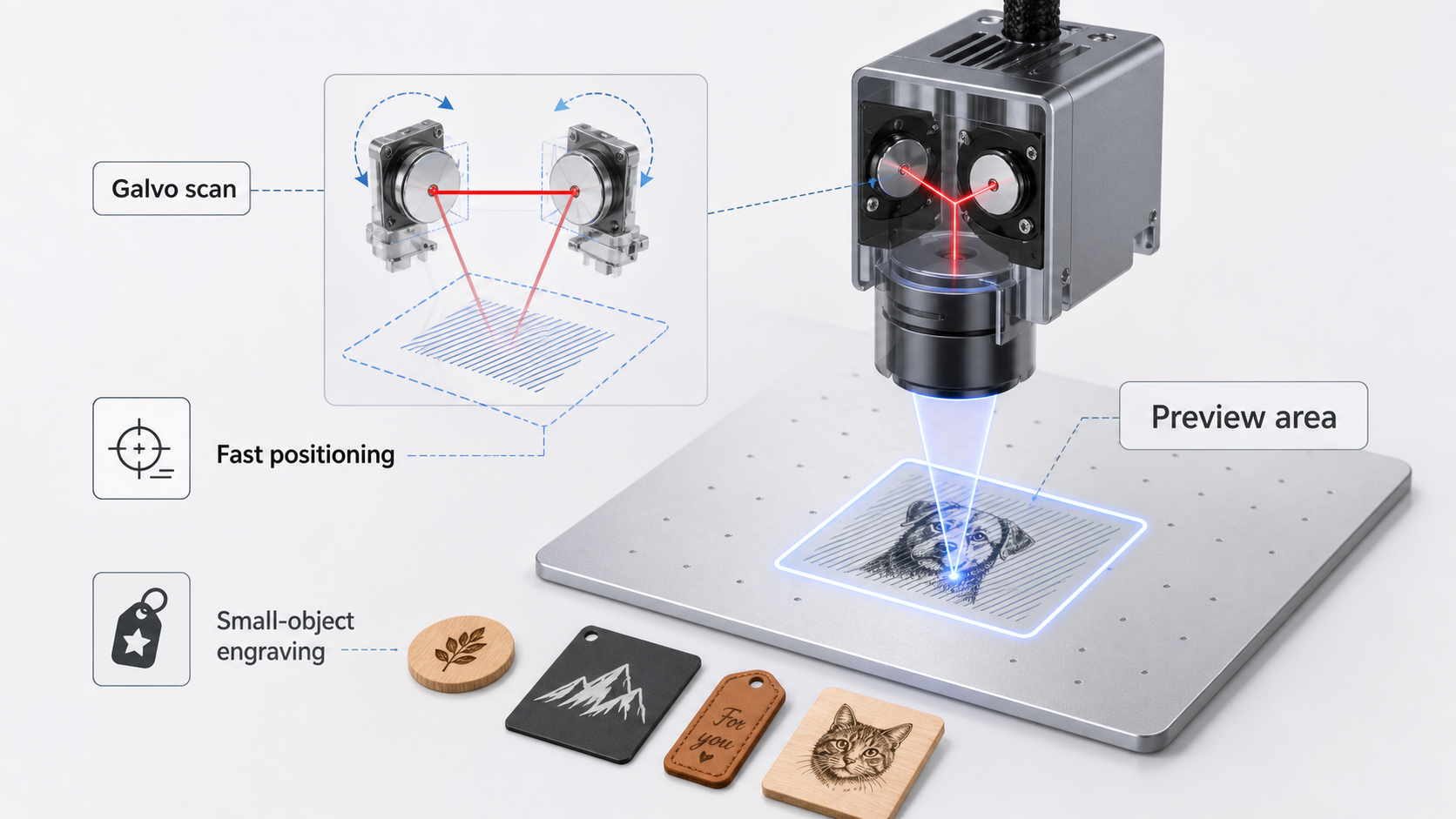
A small shop deciding between a compact galvo workflow and outsourced samples should compare the decision by learning speed, control, and risk, not only by the first visible cost. Outsourcing can be useful when a seller needs finished proof from an experienced provider. A desktop workflow can be useful when the seller wants to test small ideas repeatedly and document each step.
AntBelt G1 belongs in that second kind of evaluation: a compact tool for makers and shops that want closer access to their sample process. That does not mean every shop should make every product in-house, and it does not guarantee that every material or object will be suitable without testing.
The practical question is whether repeated sample learning matters enough to justify bringing the workflow closer to the desk. If the seller needs many small placement checks, listing experiments, and product-family tests, owning the workflow may change how quickly decisions are made.
Backers should still use the official AntBelt store for current reward details, campaign status, and risk information. This comparison is a planning lens, not a substitute for campaign details.
Shop AntBelt G1 on the official store to review current reward details and campaign updates: