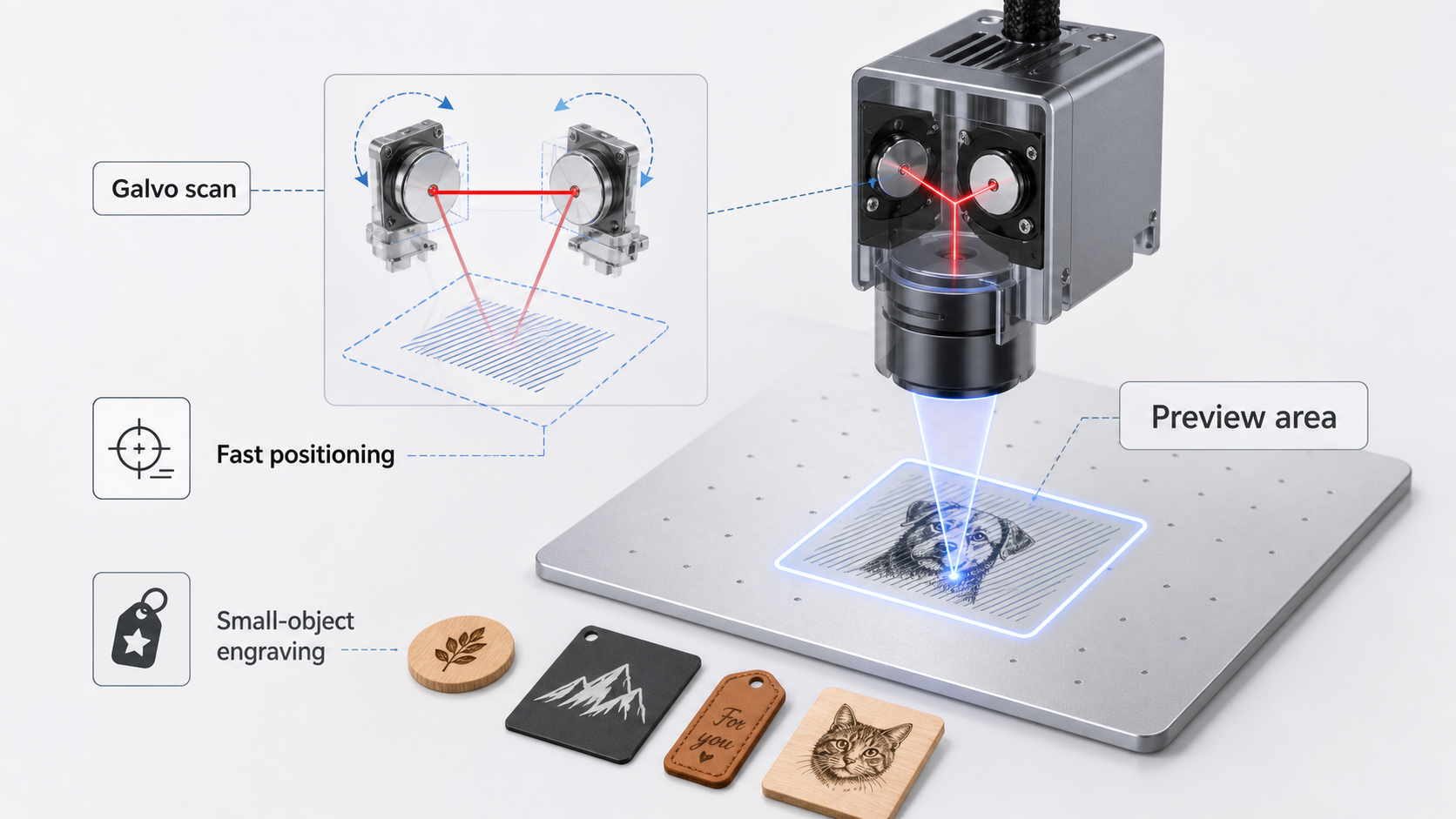
A compact galvo laser should not be compared only by a feature list. Buyers also need to ask how the tool fits their review routine: how they place small blanks, document samples, check artwork changes, and decide whether an idea is ready for a customer-facing offer.
For AntBelt G1, that makes the buying question more practical. A maker may care about desk-side sample flow. A small shop may care about proof photos and repeatable product notes. A Kickstarter backer may care about whether the campaign material helps them evaluate the tool honestly.
This kind of comparison avoids unsupported claims. It does not invent hidden performance results or final specifications. It asks buyers to connect the tool to the work they actually plan to do.
- List the first three projects you want to sample.
- Decide how each sample will be photographed and reviewed.
- Check whether the campaign updates answer your workflow questions.
- Separate final specs from visible prototype or sample evidence.
- Choose based on review habits, not only headline claims.
The AntBelt G1 update archive gives buyers a way to read workflow notes beside the Kickstarter campaign page, which is useful for a grounded comparison.