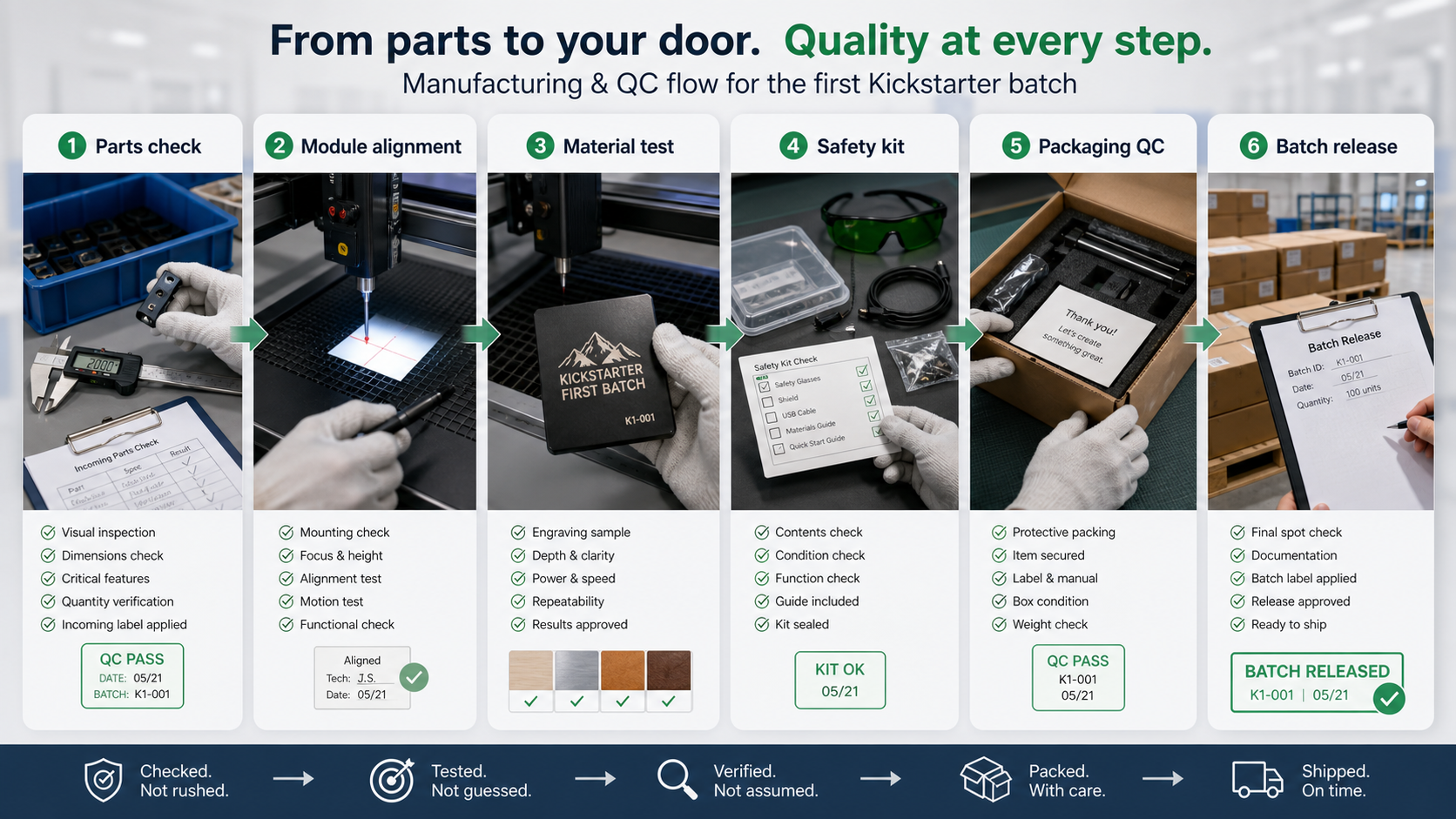
Product comparisons often focus on headline specifications while overlooking the records a real workflow needs. For a maker or small shop, previews, version notes, sample logs, and maintenance records can influence consistency long after a demo ends.
Trace artwork to approval
Ask how the workflow distinguishes an editable design from the approved production version. Look for clear orientation and placement review rather than assuming a polished interface eliminates human checks.
Trace setup to sample
Consider how an operator records object identity, surface condition, positioning reference, and reviewed settings. The best record is not necessarily complex; it is one another person can understand without guessing.
Trace the sample to a decision
Look for a way to attach observations and photographs to the conditions that produced them. A sample library should preserve limitations instead of turning one result into a broad material guarantee.
Trace interruptions and maintenance
Ask what happens when a job pauses, a material is uncertain, or the result differs from the approved plan. Review the availability of current official guidance and how routine care is documented. Do not infer service terms or maintenance intervals that are not published.
Compare the full evidence chain
Create the same five-step test for each candidate: artwork, approval, setup, sample, and archive. Score only what you can verify in current documentation or demonstrations. Keep unknowns visible and revisit official sources before purchasing.
AntBelt G1 is presented as a compact desktop galvo engraving workflow. Its current prototype demonstrations can be evaluated with this evidence-chain method, while final configuration, compatibility, and campaign terms should be confirmed in official current materials. See /updates/ for other buying-consideration guides.
Review current AntBelt G1 project details and updates on Kickstarter: