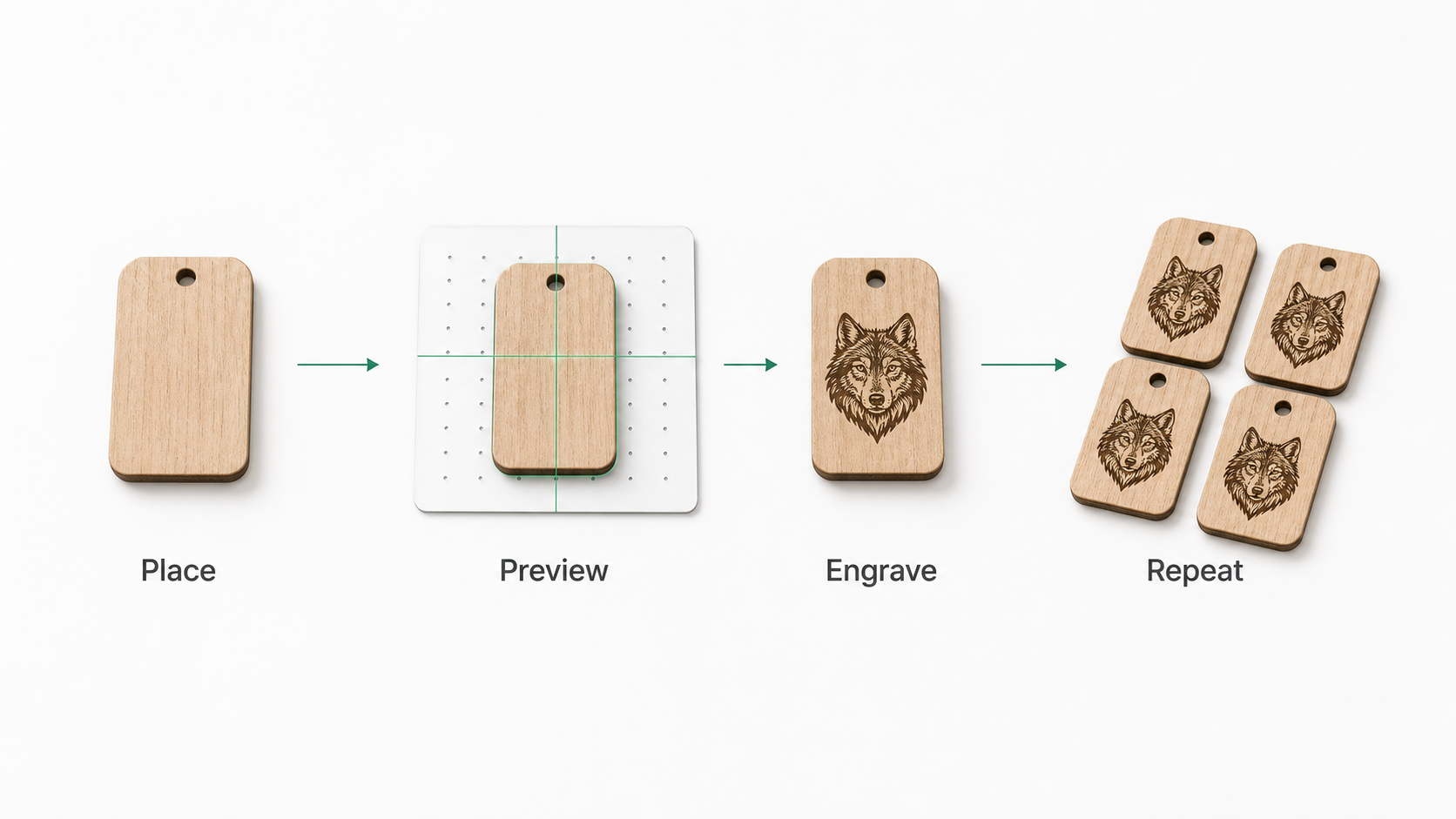
Purchase comparisons often focus on the first successful sample. A more revealing question is what happens when the customer changes a name, the object changes, or the first layout needs revision.
Trace one realistic revision
Choose a common change such as corrected spelling, a new orientation, or a different artwork version. List every step that must be repeated: approval, file preparation, sample planning, setup, inspection, and record updates. Keep assumptions identical across the workflows being compared.
Count attention as well as materials
Record operator touchpoints, required decisions, consumable test pieces, and the risk of using an outdated file. Do not invent a universal hourly output from a demonstration. The purpose is to expose where work accumulates, not to force an unsupported speed ranking.
Check the evidence behind each feature
Separate current demonstrated workflow, published product information, planned capability, and unknown detail. Confirm software, accessories, final configurations, safety requirements, and support terms from current official sources before relying on them.
Compare the whole operating context
Include workspace needs, training, ventilation, protective measures, maintenance, documentation, and the shop's own approval process. Purchase price is only one input. The best fit depends on the actual jobs and constraints of the buyer.
More AntBelt G1 planning articles are available at /updates/. Use the current campaign materials to confirm what is offered before making a purchase or backing decision.
Review current AntBelt G1 project details and updates on Kickstarter: