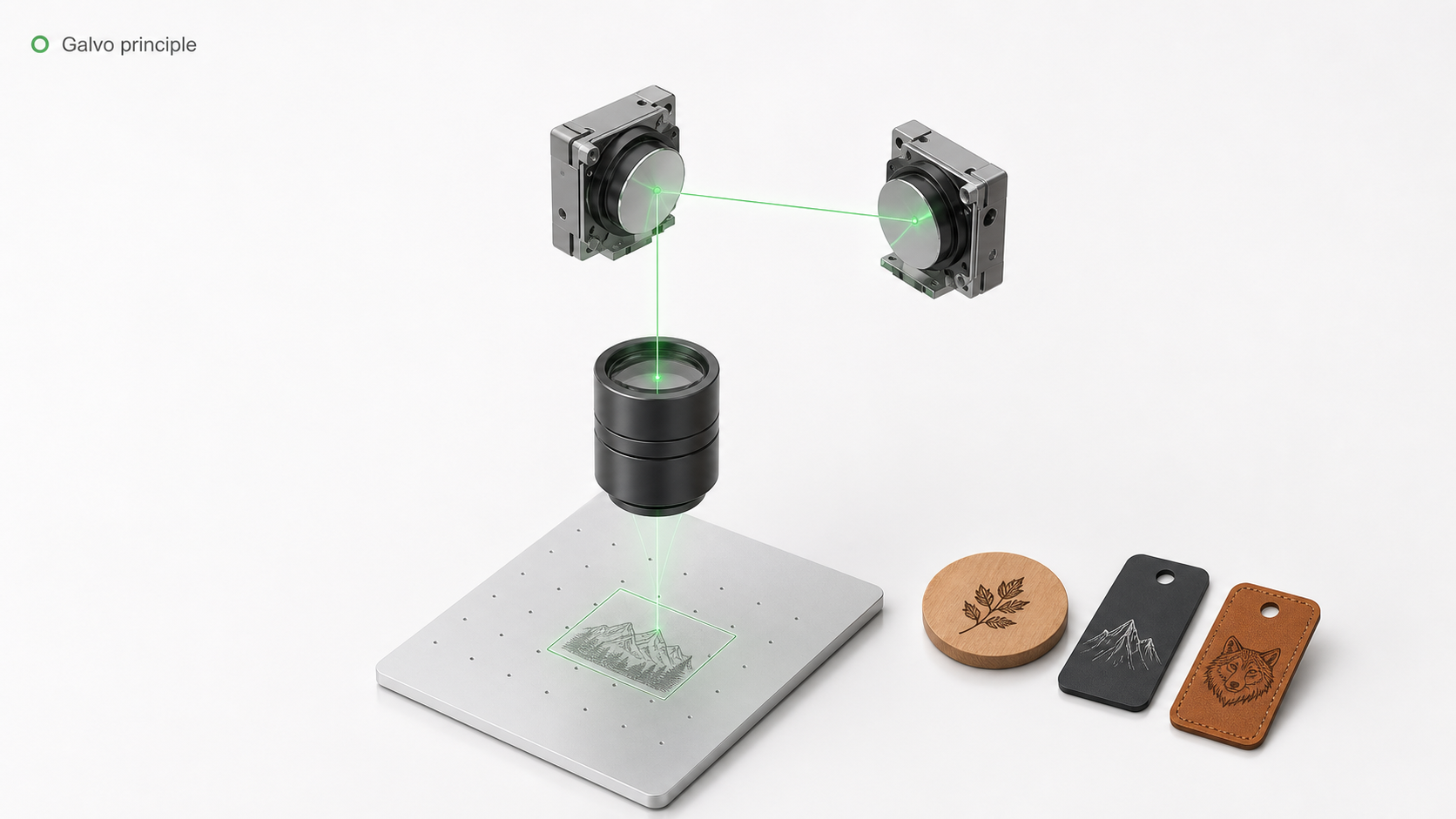
For a small shop, the first comparison is often not between two machines. It is between making proof samples in-house and waiting for outsourced samples before each decision.
Outsourcing can still make sense for some products, especially when a shop needs a process it cannot support responsibly. But for early personalization ideas, the waiting time can slow down learning. A seller may need to check name length, icon position, packaging fit, or whether a product photo tells the right story.
AntBelt G1 is positioned for creators who want a compact desktop galvo workflow, and the campaign updates show how sample thinking can support that decision. The buying question should stay practical: what kind of proof work do you actually need to repeat?
A careful comparison can include:
- How often you need new proof photos.
- Whether your product ideas change week to week.
- How much control you need over artwork placement.
- Whether your workspace can support safe attended operation.
- Which current Kickstarter reward details match your needs.
This does not mean every shop should bring every process in-house. It means the decision should be based on sample workflow, not only on headline specs or a single attractive photo.