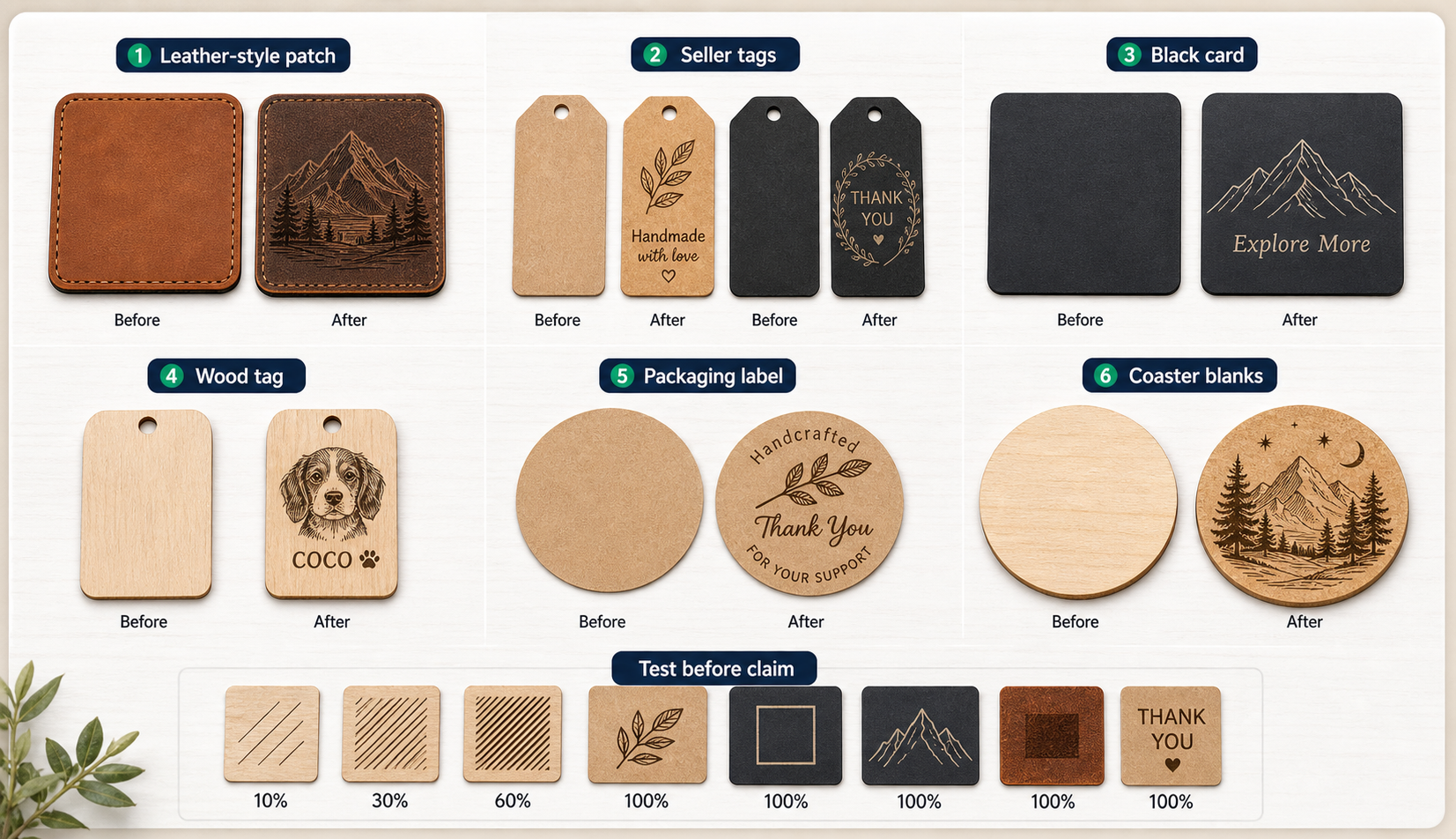
A sample scorecard is useful when it describes visible evidence and keeps preferences separate from facts. It should help two reviewers discuss the same object without pretending that one test predicts every future result.
Start with observable categories
Use categories such as placement, legibility, edge appearance, visible contrast, and surface condition. Avoid labels like perfect or production-ready unless the team has defined exactly what those terms mean.
Add a viewing condition
Record whether the sample was viewed in daylight, workshop light, or a photo setup. A mark that looks strong under one angle may appear different under another. Save an unedited reference image alongside the score.
Keep process notes bounded
Identify the sample and the current workflow version without publishing unsupported settings as universal instructions. Confirm material suitability and current operating guidance for every test. Plan ventilation, shielding, protective equipment, attended operation, and a stop procedure.
Include a next decision
End the scorecard with one of three outcomes: reject the sample, revise one variable, or preserve it as a reference. Changing one planned variable at a time makes later comparisons easier to interpret.
Current AntBelt G1 demonstrations can help buyers see how the prototype workflow is developing. They should still evaluate the visible evidence conservatively and check final campaign information rather than infer guarantees. Visit /updates/ to see more sample-focused notes.
Review current AntBelt G1 project details and updates on Kickstarter: