A reorder code should help a customer request the same design without exposing internal production settings or creating false confidence about a different object.
Encode the design decision
Build the code around the product family, artwork revision, and orientation. Keep it short enough to print on a receipt or care card. Store personal data separately so the public code does not reveal a customer name or message.
Distinguish reorder from redesign
Ask whether the new request uses the same artwork, same object type, and same viewing direction. If any of those change, treat it as a fresh review. This protects the seller from assuming that an earlier outcome transfers automatically to a new finish or geometry.
Keep a visual reference
Save the approved design and a neutral finished-item photo with the internal record. Avoid presenting one sample as a material guarantee. Current material guidance, safe setup, and a suitable test remain necessary for future work.
Make the customer instruction simple
Explain that the code retrieves the earlier design reference, while availability, price, and suitability are reconfirmed for each order. That sentence sets a useful expectation without adding friction.
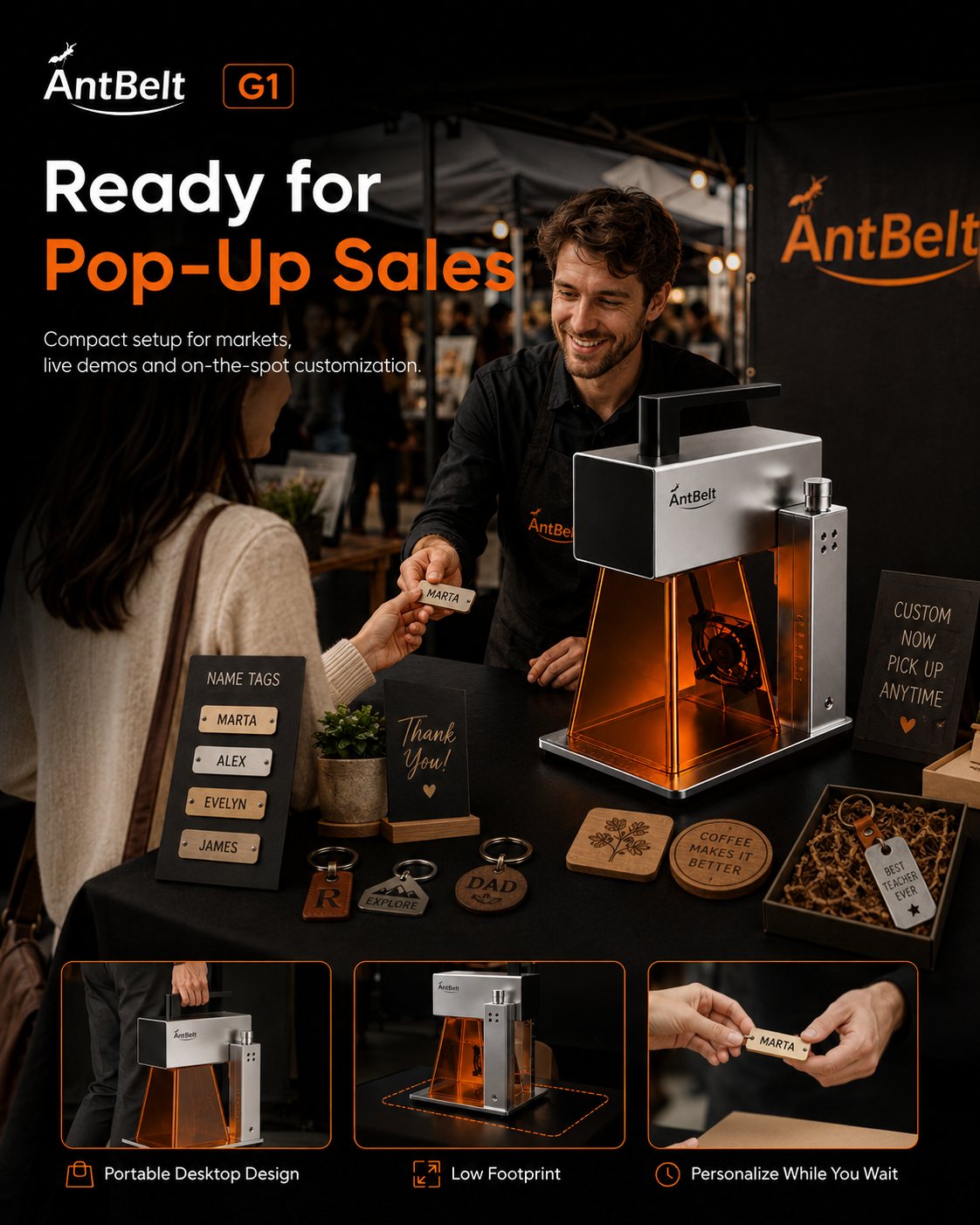
For a compact engraving setup, this kind of information discipline can matter as much as the machine footprint. AntBelt G1 campaign materials show the current direction of the desktop galvo workflow; buyers should confirm final details on the campaign page. Visit /updates/ for more order-planning notes.
Review current AntBelt G1 project details and updates on Kickstarter: