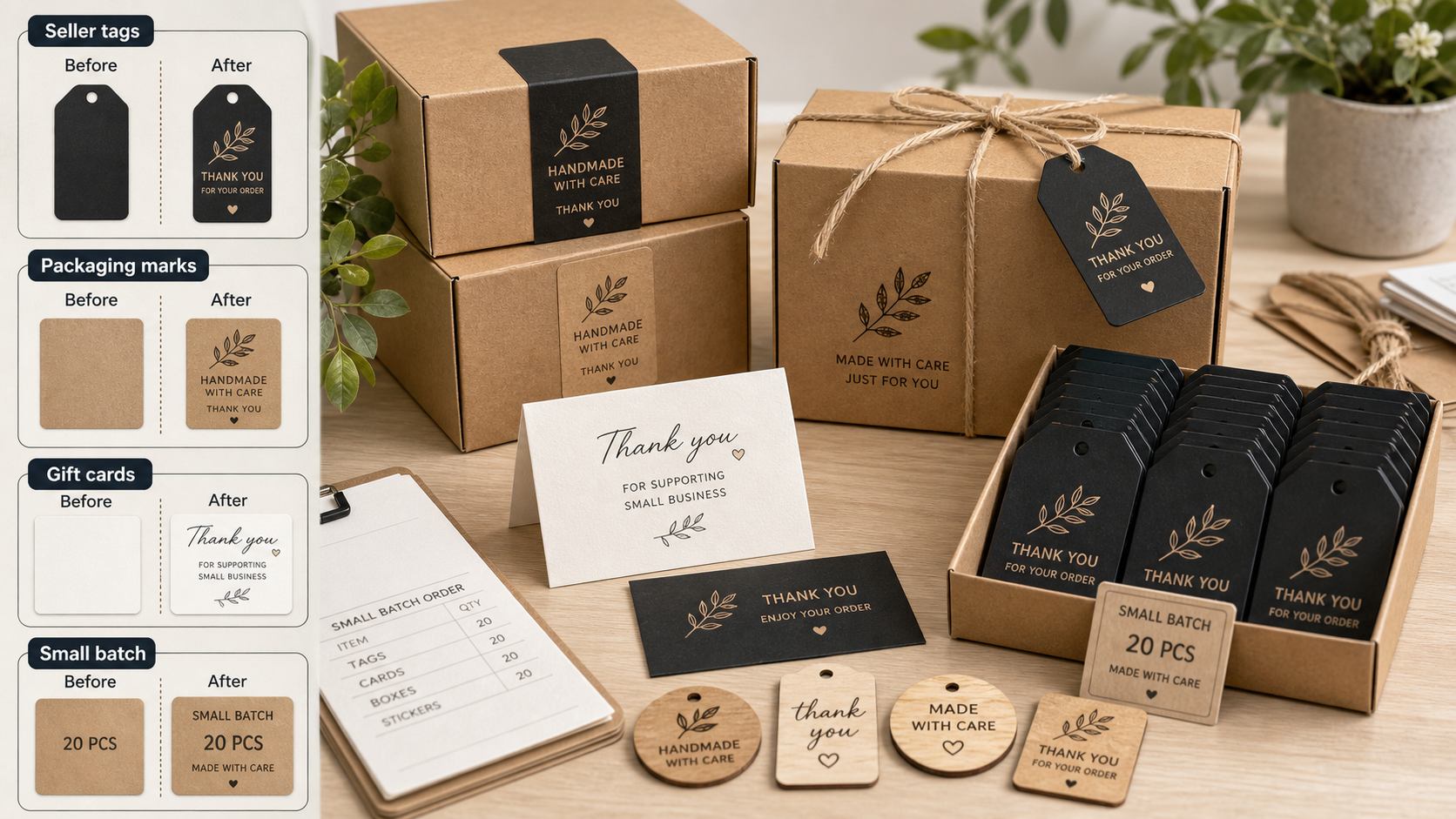
Many custom-order problems start before the engraving step. If the order note is unclear, even a good sample process can turn into extra messages, rework, and a weaker customer experience.
For sellers watching AntBelt G1 as a Kickstarter pre-launch tool, the useful question is not only what the machine may do. It is how a small-shop workflow should be organized around short personalization jobs.
Good order notes should capture:
- The exact text to engrave.
- Capitalization and spacing preferences.
- The selected blank type or color.
- The requested placement, such as center, lower corner, or tag face.
- Whether a proof image is required before production.
This is especially important for items like gift tags, packaging inserts, black cards, small wood pieces, and selected laser-safe blanks. These are compact products where a few characters or a small alignment choice can change the result.
AntBelt should be discussed conservatively here. The G1 campaign is still in the pre-launch phase, with final details expected on Kickstarter. But the seller workflow problem is already clear: faster tools do not remove the need for clean customer inputs.
A simple order-note template can also protect a seller from overpromising. If a requested material, finish, or layout has not been tested, the seller can say so before accepting the order. That keeps the conversation practical.
For launch context and related update posts, browse /updates/.