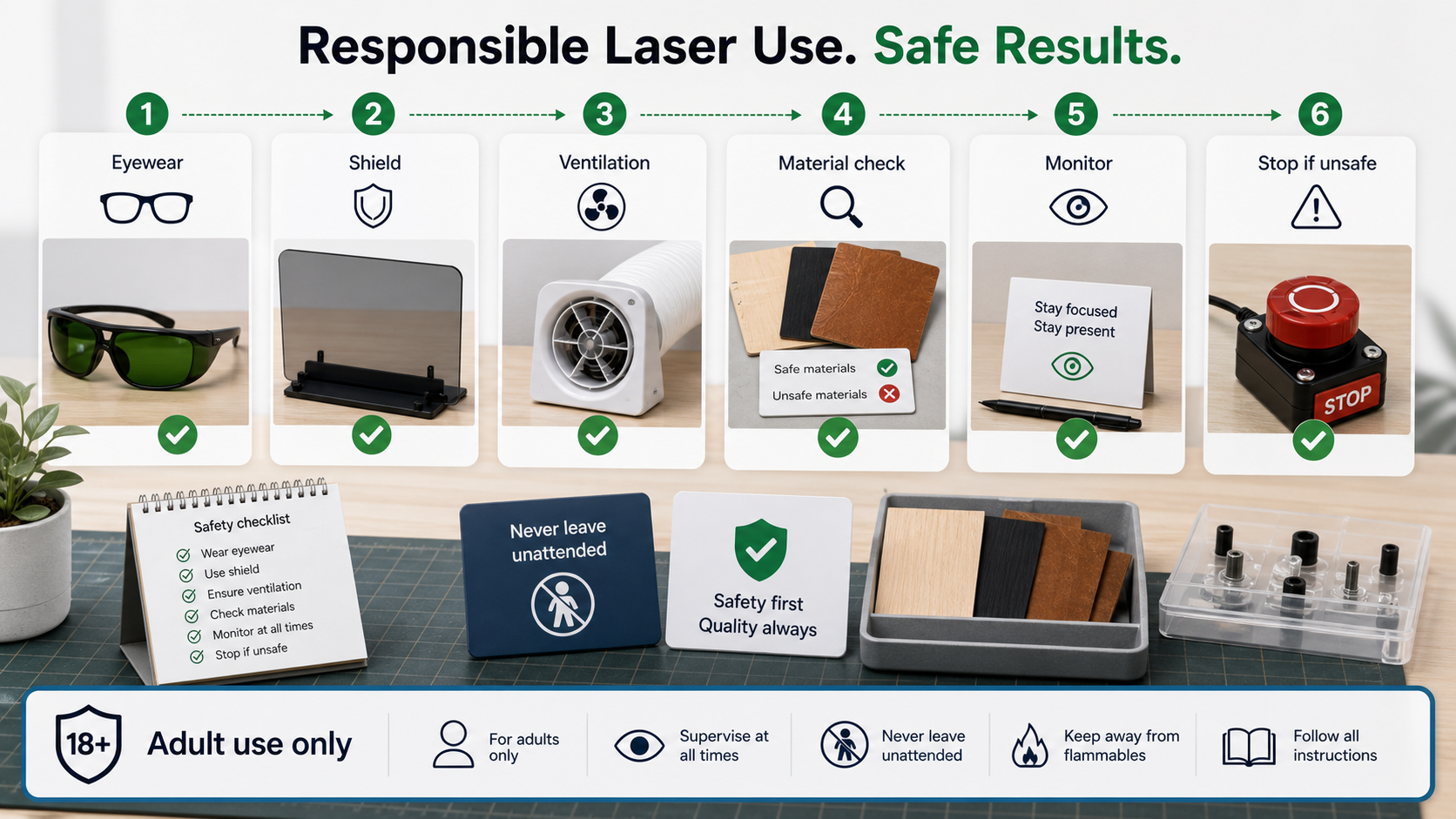
A blank with missing material information should not enter the ready-to-run tray simply because it resembles a familiar sample. Separate material identification from the convenience of having an object close at hand.
Create an unresolved-material location
Set unidentified blanks aside with a note describing what information is missing, such as composition or surface treatment. Seek reliable supplier information and consult the applicable equipment material guidance before deciding whether the item may be processed.
Do not use a test burn as a way to identify an unknown material. A visual resemblance to a previously used blank is not a substitute for a supported compatibility decision.
Make readiness visible
A ready job should have identified material, an approved design, and a documented setup appropriate to the equipment. Follow the applicable protection, shielding, ventilation, and attended-operation instructions; a sorting tray provides no physical protection.
For AntBelt G1 workflow planning, this is a material-handling habit rather than a substitute for the operating instructions. If the missing information cannot be resolved, keep the blank out of the processing queue.
Browse related AntBelt project notes in /updates/.
Review the current AntBelt G1 project information on Kickstarter: