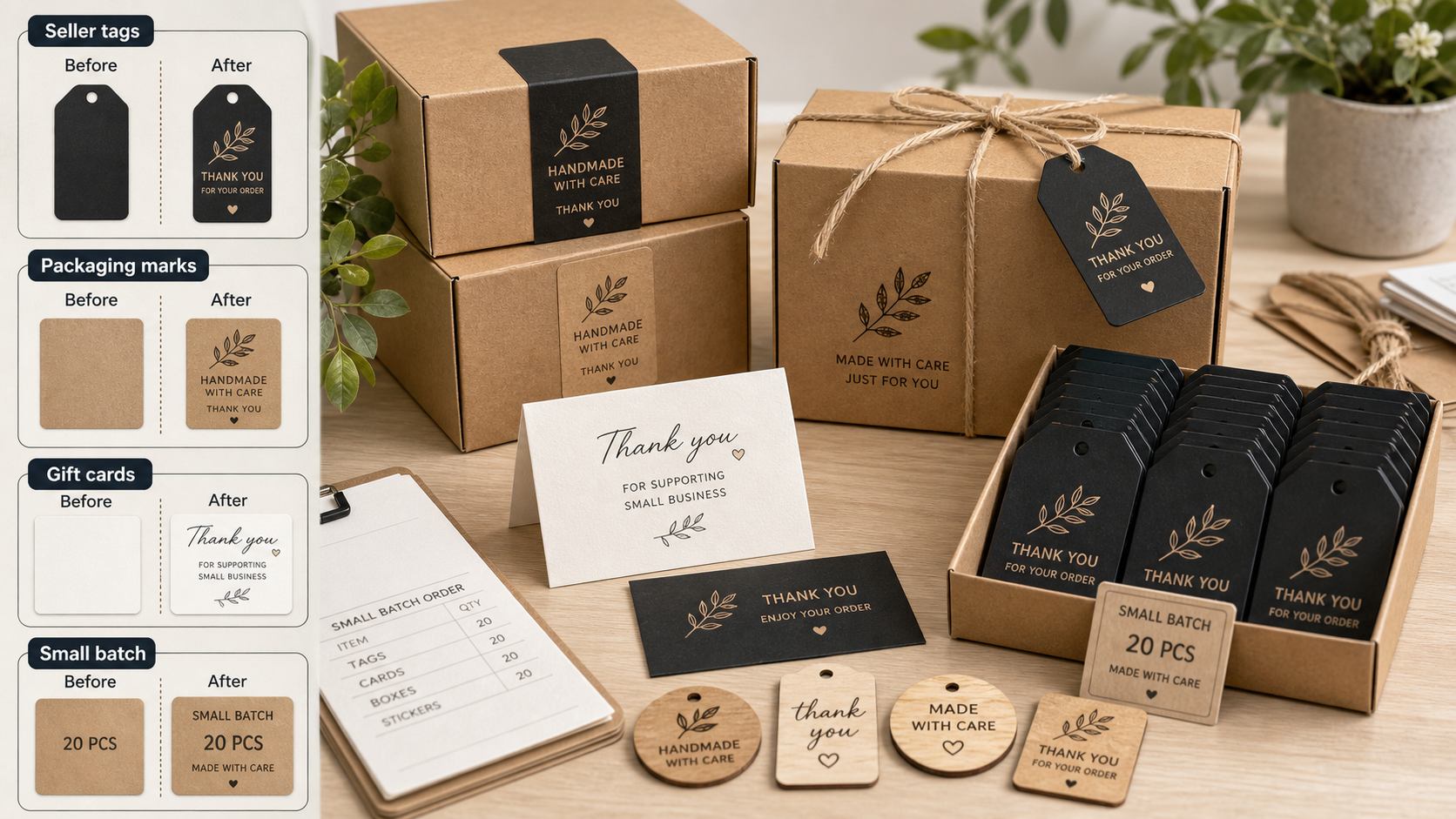
A small personalization menu is easier to test when it begins with two offers instead of a full catalog. One flat tag and one packaging insert can tell a seller more than a long list of unproven options.
For an AntBelt G1 planning note, the safest pricing conversation starts with time, rework risk, and presentation value. A seller can ask whether the customer understands the add-on, whether the blank is easy to replace, and whether the finished piece photographs clearly for the listing.
The menu should avoid strong claims until the shop has repeated the workflow. It is better to describe a first offer as a controlled sample plan than to suggest a shop can immediately handle every material, artwork style, or order volume.
Round or curved items can belong in a later menu, but they should be treated as their own test family. AntBelt supports cylindrical engraving, yet the seller should still keep flat-object notes and cylindrical-object notes separate so expectations stay clear.
Shop AntBelt G1 on the official store to review current reward details and campaign updates: