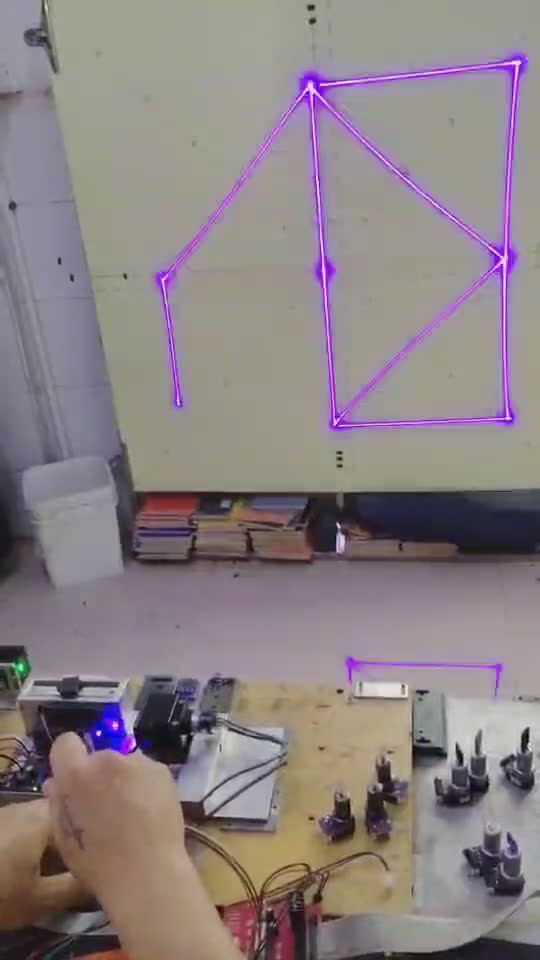
Recent examples include:
- The first power-on prototype video.
- A color board engraving sample.
- A disc engraving sample.
- A leather-style engraving sample.
- A wood card case video.
- A broader fast-galvo overview clip.
Taken together, those videos do not prove every final campaign detail. What they do suggest is that the team is trying to build a visible record across prototype proof, sample proof, and everyday workflow proof.
That matters for a Kickstarter audience. People evaluating a first campaign usually want to see motion in the project, not only polished graphics. Short sample clips can be especially useful because they help viewers judge whether the machine is being positioned around realistic desk-side jobs like tags, cards, compact gift parts, and other small objects.
The strongest next step is not to over-interpret any single clip. It is to watch whether AntBelt keeps adding consistent public proof: more sample context, clearer workflow coverage, and more operational updates over time.
For a deeper trail of launch-facing posts, keep an eye on /updates/. For the primary follow action, the Kickstarter pre-launch page remains the main destination.