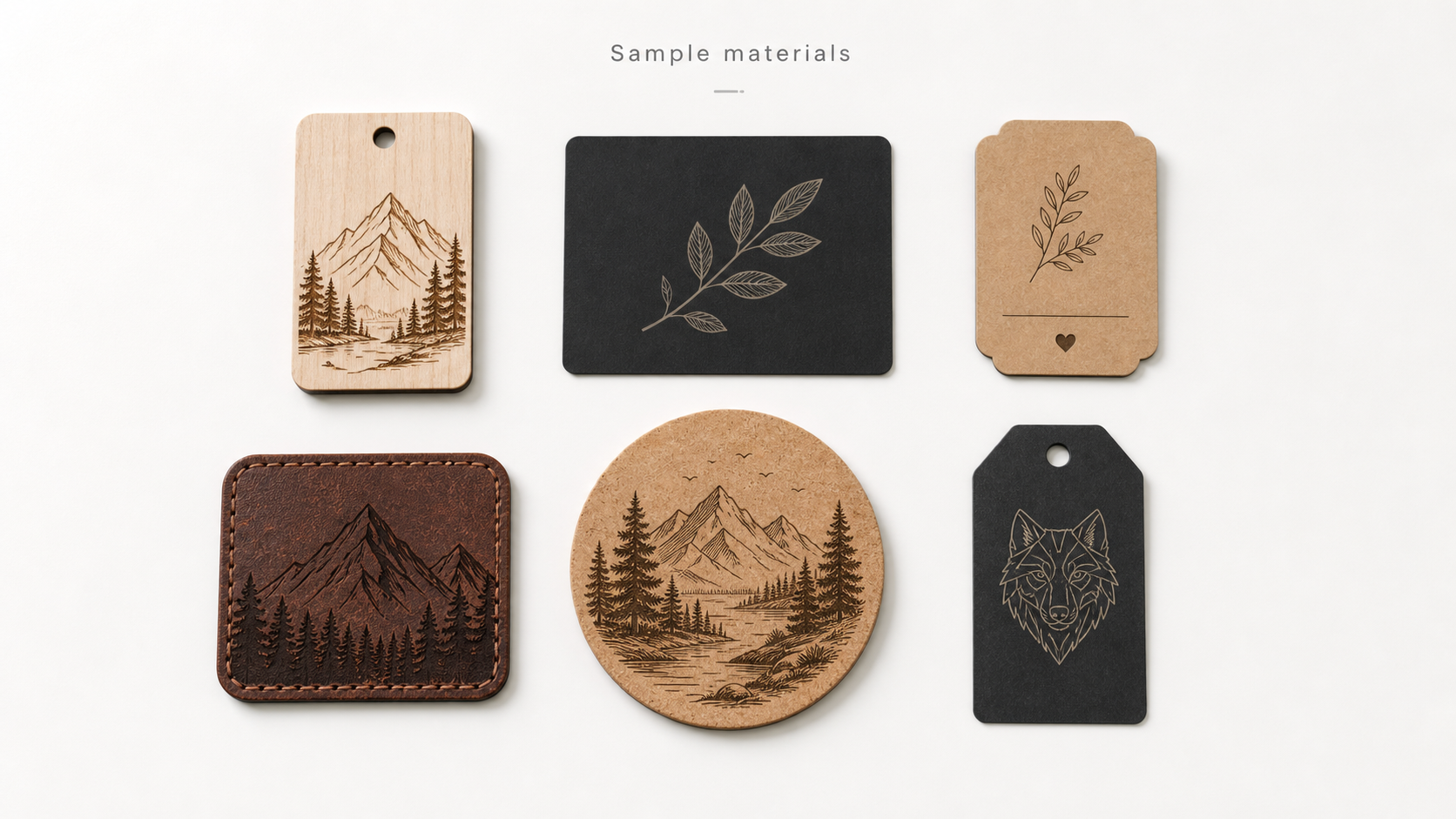
A comparison folder can become misleading when an inconvenient sample disappears without explanation. Keep an exclusion note so a later viewer knows why the remaining examples were selected.
State the selection rule
Before comparing results, define what makes records comparable: known specimen identity, documented preparation and usable photographs, for example. These are record-quality criteria, not proof that different materials behave alike.
If one sample has an unreadable identifier, keep its file and mark it excluded because its identity cannot be confirmed. If another lacks a starting-condition photo, describe that missing evidence. Do not relabel either specimen as a successful or failed engraving based only on the incomplete record.
Keep originals beside the selected set
Save a list of included records and their selection date. Retain excluded records separately with their reasons, so changing the selection later remains visible. A public presentation should explain meaningful limits instead of presenting selected images as universal outcomes.
When planning AntBelt G1 sample updates, this approach makes a smaller evidence set easier to interpret. It does not create test results or justify compatibility claims that have not been established.
Explore related AntBelt preparation notes at /updates/.