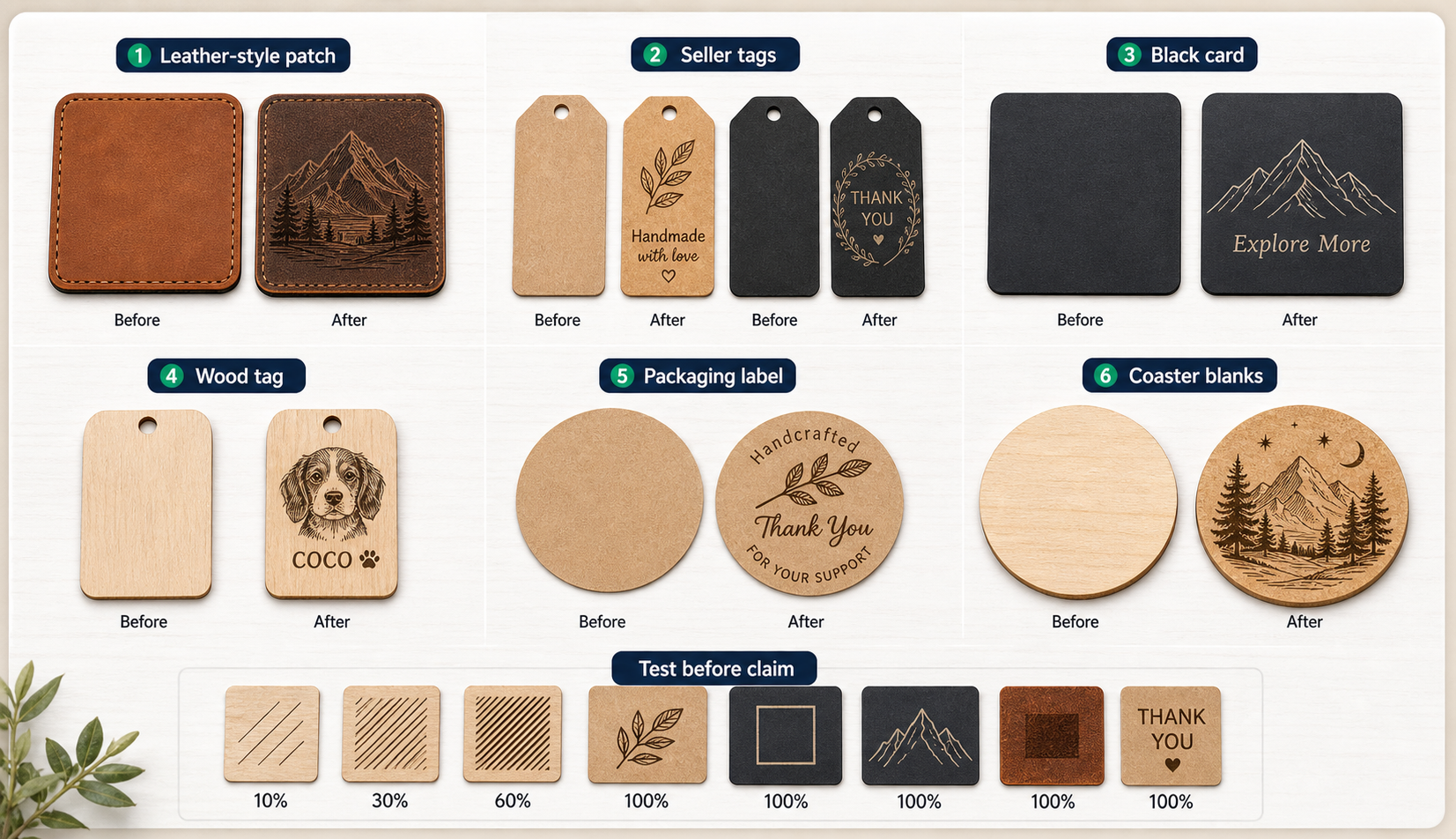
A sample can look readable without proving everything about a material. That is why contrast notes and material claims should stay separate in early AntBelt G1 testing.
A contrast note describes what the maker can see in the sample: text readability, line spacing, visual balance, or whether the artwork is too dense. A material claim goes further and may imply durability, compatibility, long-term behavior, or repeatability. Those stronger statements need more careful evidence.
For public campaign content, the conservative path is better. Show what the current prototype and sample routine can help review, then leave final material conclusions to verified testing and current campaign details. This protects both backers and sellers from reading too much into a single photo.
A material sample board can stay useful with plain labels:
- Blank type.
- Artwork version.
- Setup note.
- Contrast observation.
- Follow-up question.
This structure helps first-time creators learn from each sample without turning every result into a public promise. It also makes the AntBelt G1 updates easier to read because each visual has a job: context, not overclaiming.