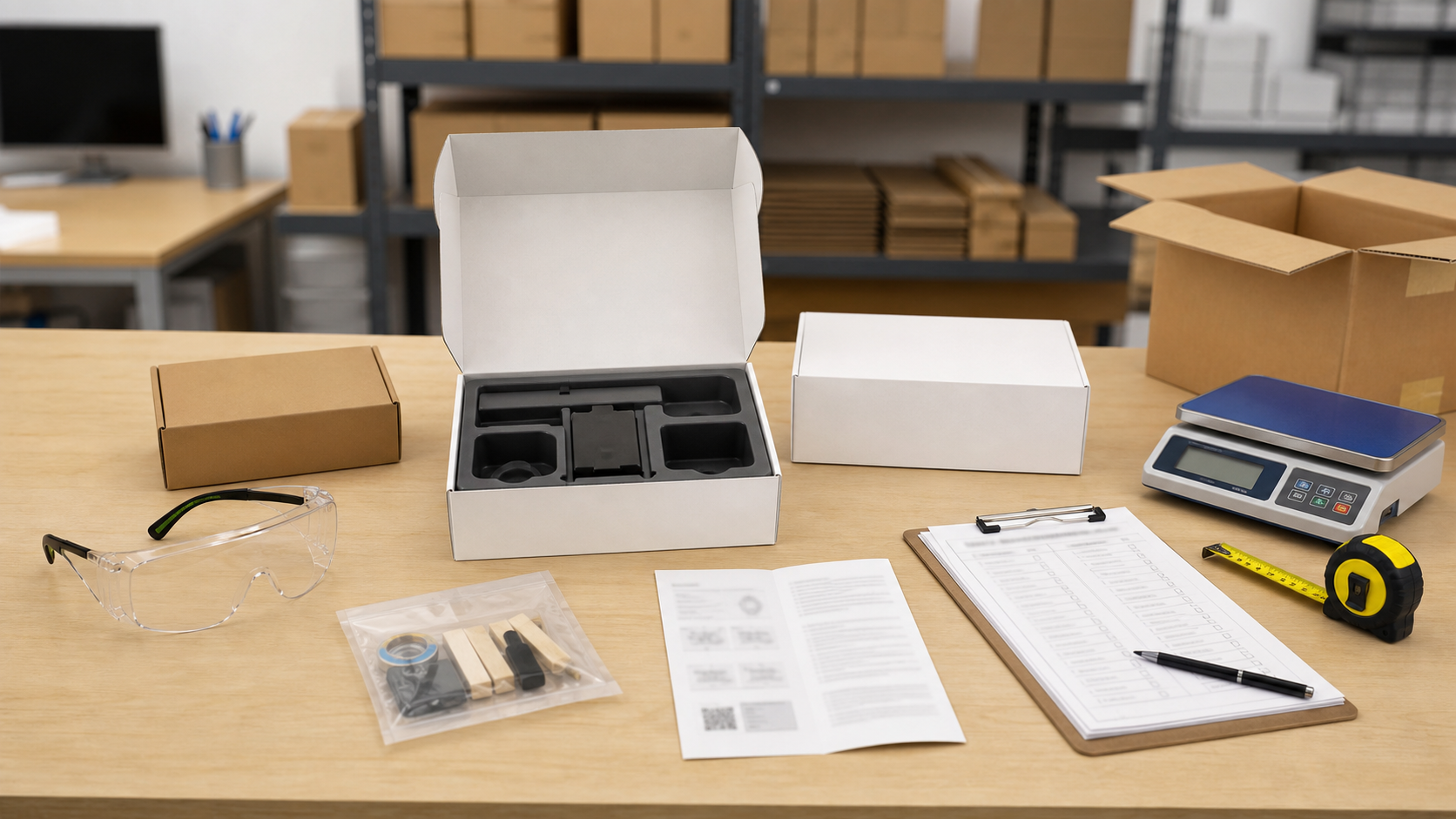
Customer approval and production release answer different questions. Approval confirms that the customer accepts the content and appearance; release confirms that the shop has completed its own material, setup, and safety checks.
Give each decision a name
Label the customer-facing record “artwork approval.” Include spelling, layout, orientation, and the exact version shown. Label the internal record “production release.” Include the item identity, planned setup, operator, and review date.
Prevent silent substitutions
If an object, finish, or artwork file changes after approval, reopen the relevant decision. A similar-looking item is not automatically the same production condition. A version number or timestamp helps the team avoid using an older proof.
Make the handoff visible
Place approved jobs in a distinct queue and keep unreleased jobs out of the production area. A simple status card can show “awaiting customer,” “awaiting shop review,” or “released.” This is easier to audit than relying on chat messages or memory.
Preserve a minimum record
Keep the proof the customer saw, the release checklist, and a photo or note tied to the completed order. Avoid storing unnecessary personal information in open workshop records. The point is traceability, not collecting more customer data.
Use exceptions as feedback
When a job is paused, record the reason in neutral language. Repeated pauses for unclear orientation or missing material details reveal where the order form needs improvement. That turns a production safeguard into a practical business tool.
AntBelt G1 is presented as a compact desktop galvo engraving workflow for makers and shops. Current prototype material can support workflow evaluation, but final product details belong in the latest official campaign information. Browse /updates/ for more order-control ideas.
Review current AntBelt G1 project details and updates on Kickstarter: