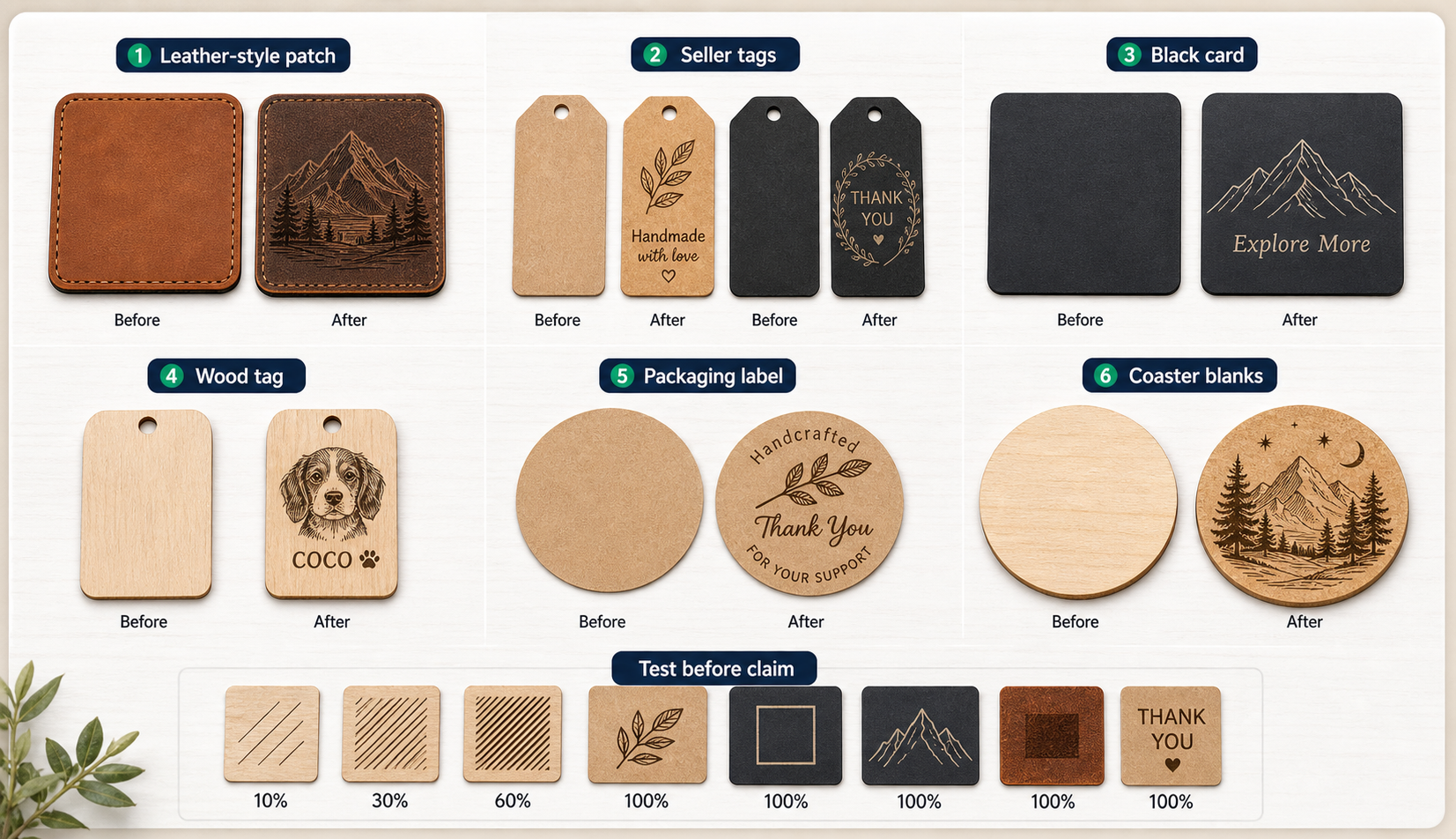
A material card is most useful when it asks a clear question. If the card is treated as a final verdict too early, the maker may miss important context about artwork, setup, surface finish, or the next review step.
For AntBelt G1 sample planning, a material card can record what was tested, what was visible, and what remains undecided. That is different from claiming universal performance. One sample can guide the next decision, but it should not become a blanket promise about every blank in the same category.
A practical material-card note can include:
- Material or object name as labeled by the maker.
- Artwork version being reviewed.
- The single question the sample is meant to answer.
- Photo reference for the visible result.
- Follow-up question before public product wording.
This style of note helps teams and small sellers avoid vague claims. It also makes future update pages easier to read because each sample has a reason to exist.
For related AntBelt G1 posts, see /updates/.
Shop AntBelt G1 on the official store to review current reward details and campaign updates: