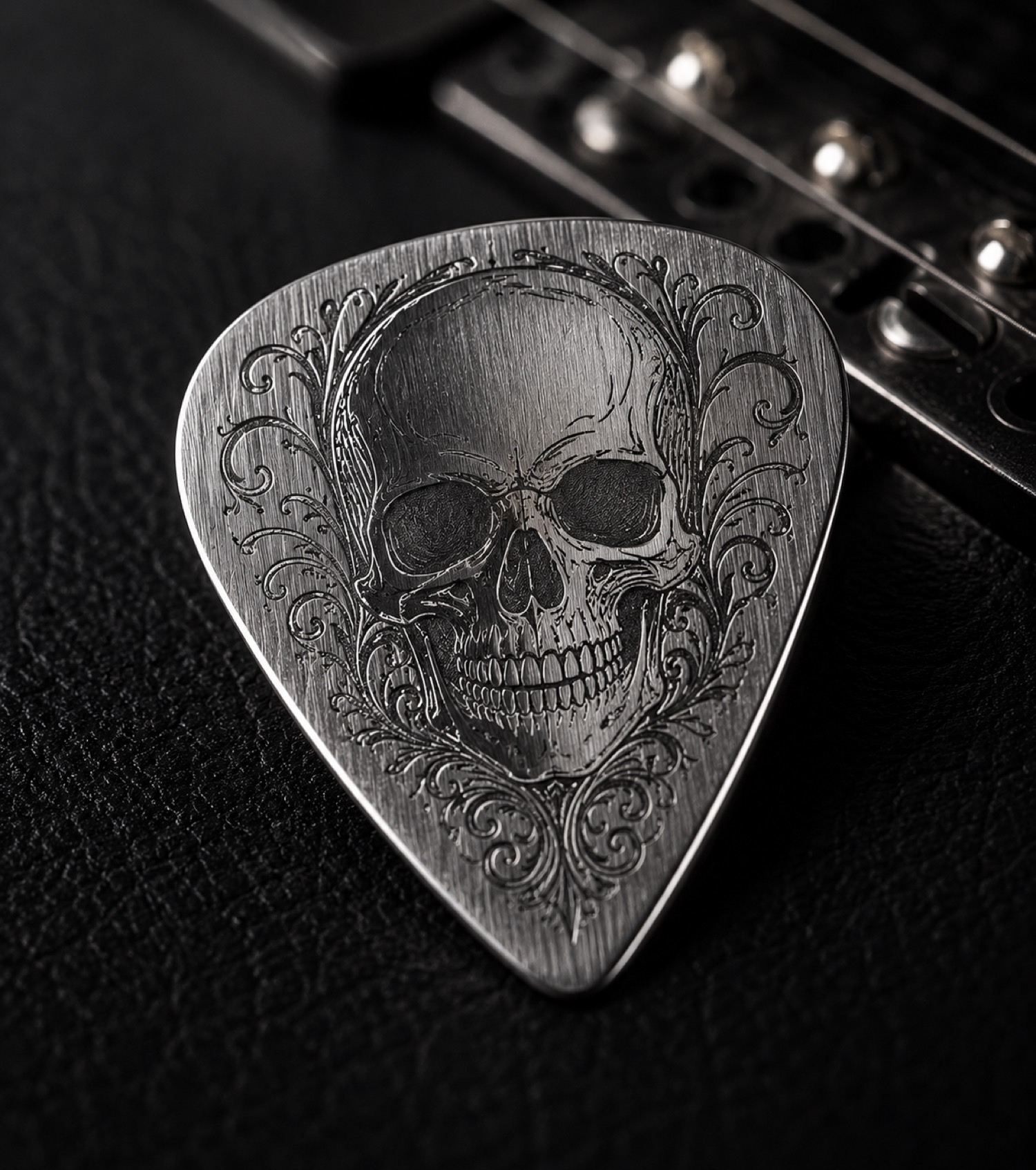
A sample can look clear in one photograph and nearly disappear in another. Adding a raking-light view—light arriving from the side—helps document surface visibility without claiming the photo represents every viewing condition.
Capture a small photo set
Photograph the sample straight on under diffuse light, then from the same position with side lighting. Include the unprocessed blank and a label for the artwork revision and sample batch. Avoid filters that make the surface change look stronger than it appeared in person.
Describe observations, not guarantees
Note whether edges, fine lines, or broad filled areas remain readable in each view. Separate photographic contrast from conclusions about wear, permanence, or material-wide performance. Those require their own suitable evidence and cannot be inferred from a single sample.
Confirm material compatibility and follow current guidance for setup, guarding, ventilation, protective equipment, and attended operation. Results vary with composition, finish, artwork, setup, lighting, and camera processing.
Browse /updates/ for more AntBelt G1 material-test documentation ideas.
Review current AntBelt G1 information and campaign updates on Kickstarter: