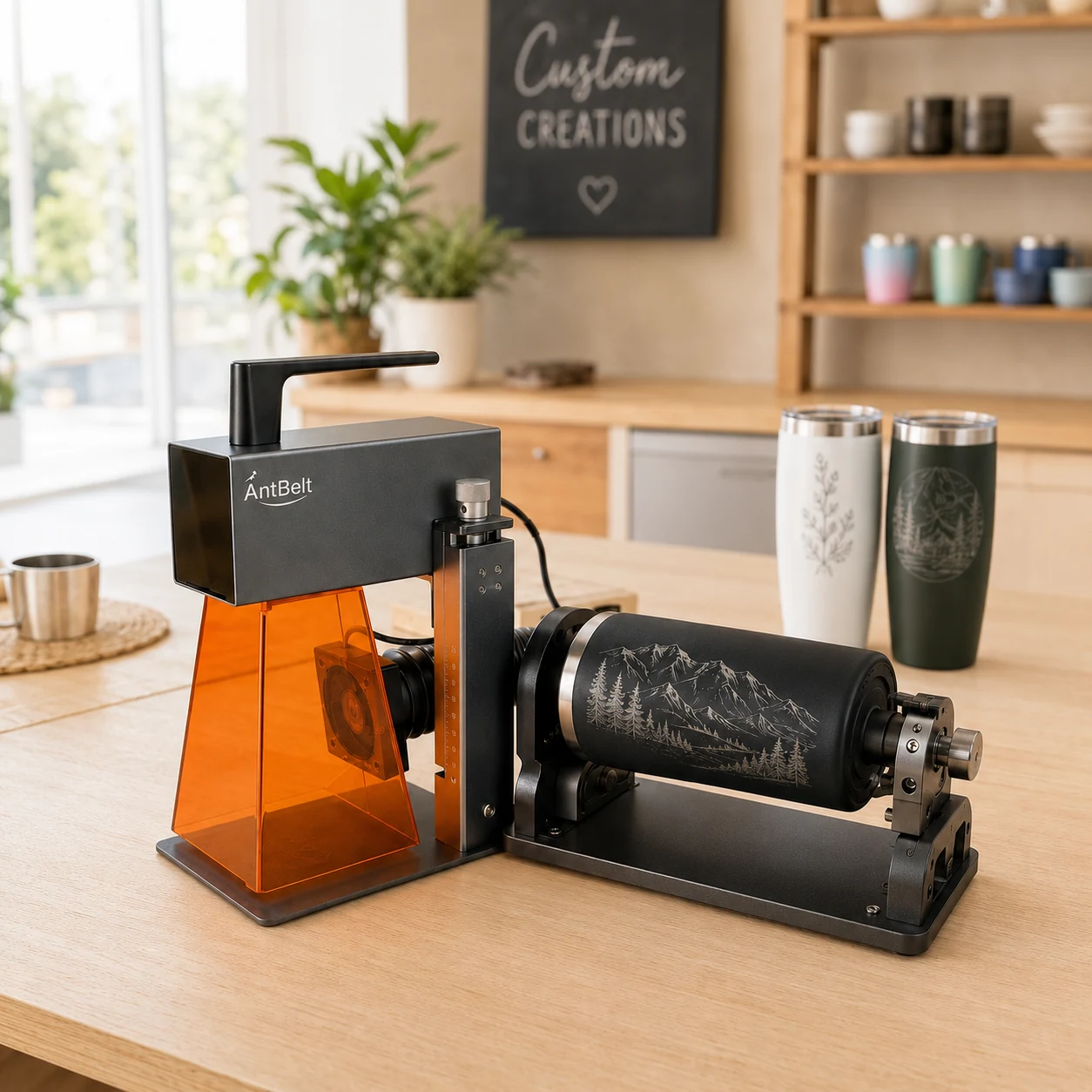
Cylindrical artwork has a boundary that a flat preview can hide: the meeting point between the beginning and end of the design. A paper seam check makes that boundary visible before a maker commits to a machine workflow.
Print a planning strip
Print the artwork as a simple paper strip at the intended visual scale, then wrap it around the representative object without treating the paper as a fixture. Mark where the ends meet and note whether text, borders, or repeated elements crowd the seam.
Choose an intentional quiet zone
Move important details away from the meeting point and leave a deliberate gap when the design benefits from one. Photograph the approved orientation, including the top and bottom references. This creates a useful conversation aid for a customer or another operator.
Separate layout support from final hardware details
AntBelt supports cylindrical engraving, but the paper exercise does not define final accessory specifications, supported object dimensions, settings, or material outcomes. Makers should check current product information and operating guidance before planning a real sample.
Browse /updates/ for more AntBelt G1 preparation ideas. Use an appropriate test piece and document each controlled change before moving to a valued object.
See current AntBelt G1 campaign details and cylindrical-workflow updates on Kickstarter: