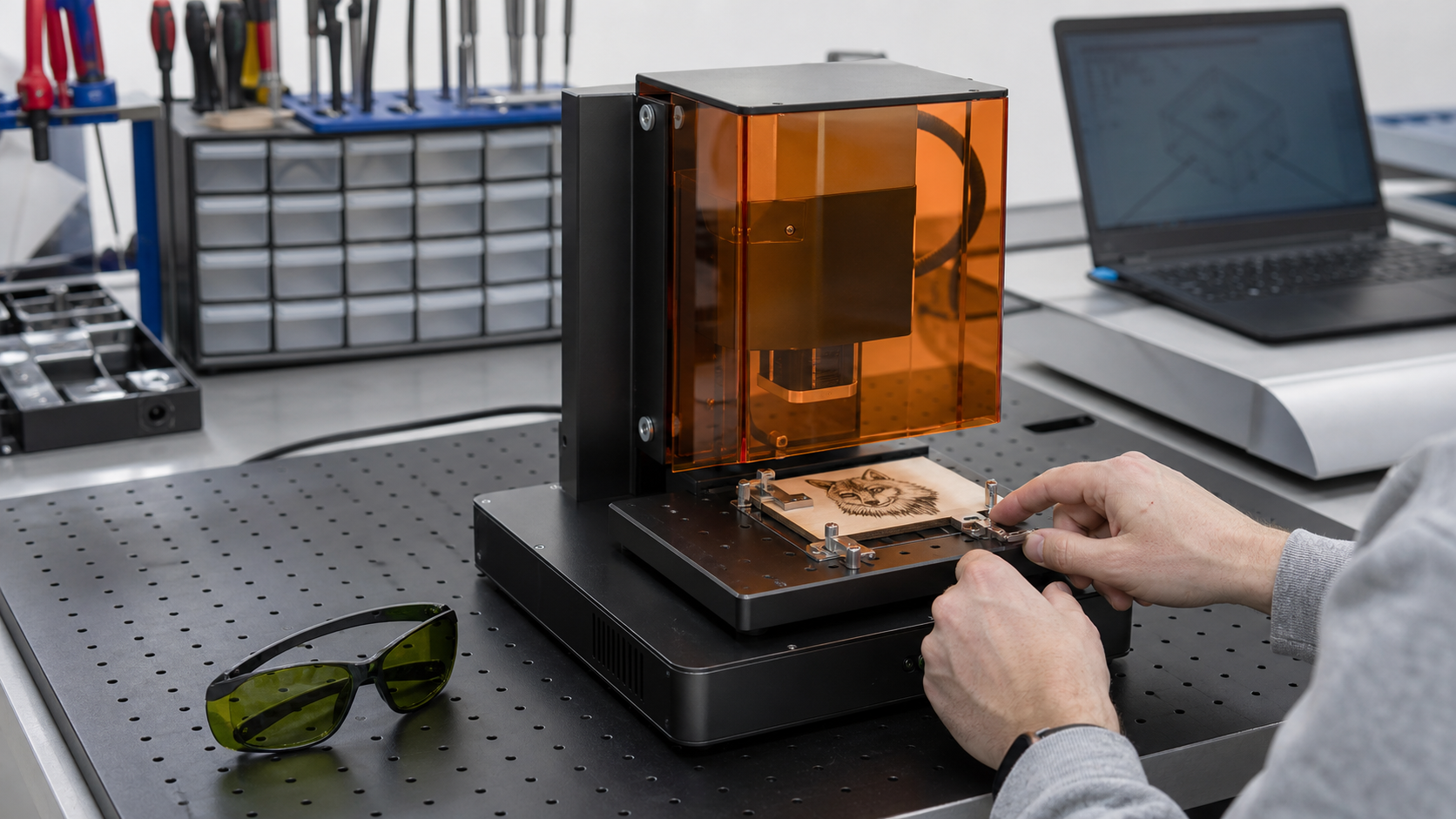
A useful test begins with one sentence: what exactly should this run help you observe? Write that question before opening the artwork. It could concern placement, visible contrast on one identified sample, or whether a revised layout is easier to review.
Give the question boundaries
Record the material description, artwork version, date, and the one condition you intend to examine. Leave space for observations and an inconclusive result. If the material identity or current operating guidance is unclear, the correct outcome is to stop rather than improvise.
Keep the answer narrow
After the run, answer only from the sample in front of you. A visible result on one piece does not establish compatibility, durability, production speed, or a guaranteed outcome for another batch. Photograph the sample with its question card so the conclusion remains attached to its conditions.
This small habit turns a test into a traceable learning step. It also makes it easier for another person to understand what changed without relying on memory. Confirm focus, secure positioning, shielding, ventilation, and attended operation under current guidance before any work.
Explore more documented maker routines in /updates/.
Follow AntBelt G1 and review the latest project information on Kickstarter: