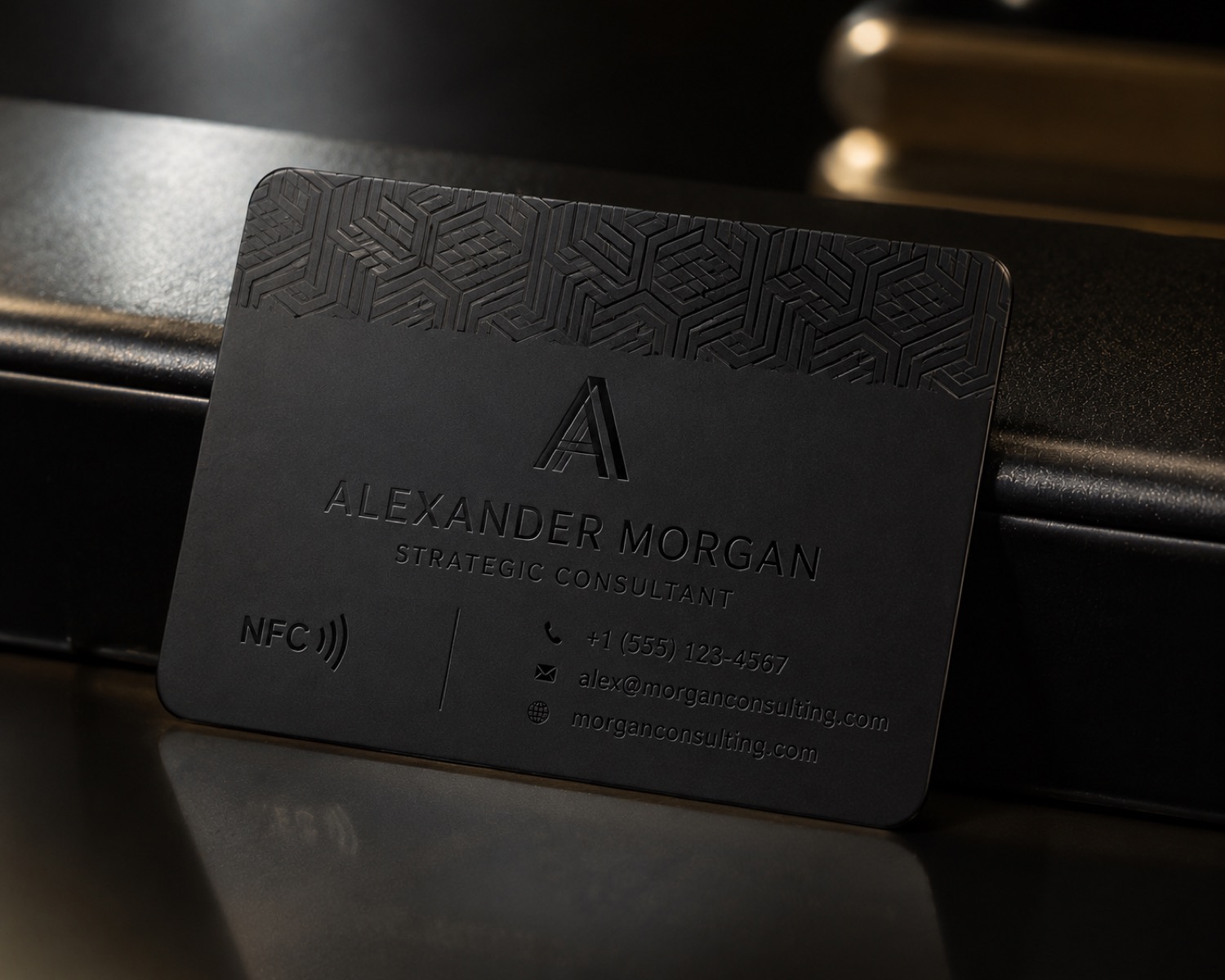
Black card samples are useful because they make contrast easy to inspect. A small mark on a dark card can quickly show whether an artwork direction is readable, balanced, and worth further testing.
That does not make one card sample final proof for every paper stock or product idea. Paper thickness, coating, surface finish, supplier changes, and artwork density can all affect the final result. A conservative pre-launch content strategy should make that clear.
For AntBelt G1, black card examples fit the compact desktop story well. Cards, tags, packaging inserts, and small presentation pieces are natural categories to explore. But the right claim is narrow: black-card samples can help evaluate contrast and design direction before final Kickstarter details are confirmed.
Makers can use black-card tests to check:
- Whether thin text remains legible.
- Whether a logo needs more spacing.
- Whether the mark suits the intended gift or packaging use.
- Whether the sample should be repeated on a second card stock.
This is also a good reminder for content reviewers. If a post shows a sample, the article should explain what the sample proves and what it does not prove. That is more credible than turning every image into a broad material claim.
For recent video and sample context, see /updates/recent-antbelt-video-roundup-june-20-2026.html and browse /updates/.